
SaaS Product Launch Checklist for Startups 🚀
Launching a SaaS product is one of the most exciting milestones for a startup. But it’s also a complex journey—filled with challenges that can make or break your success. Without the right roadmap, even the most innovative idea can struggle to find traction. That’s why a SaaS product launch checklist is essential—it ensures you cover every step, from strategy to execution.
Let’s dive into the ultimate checklist to guide your SaaS launch in 2025.
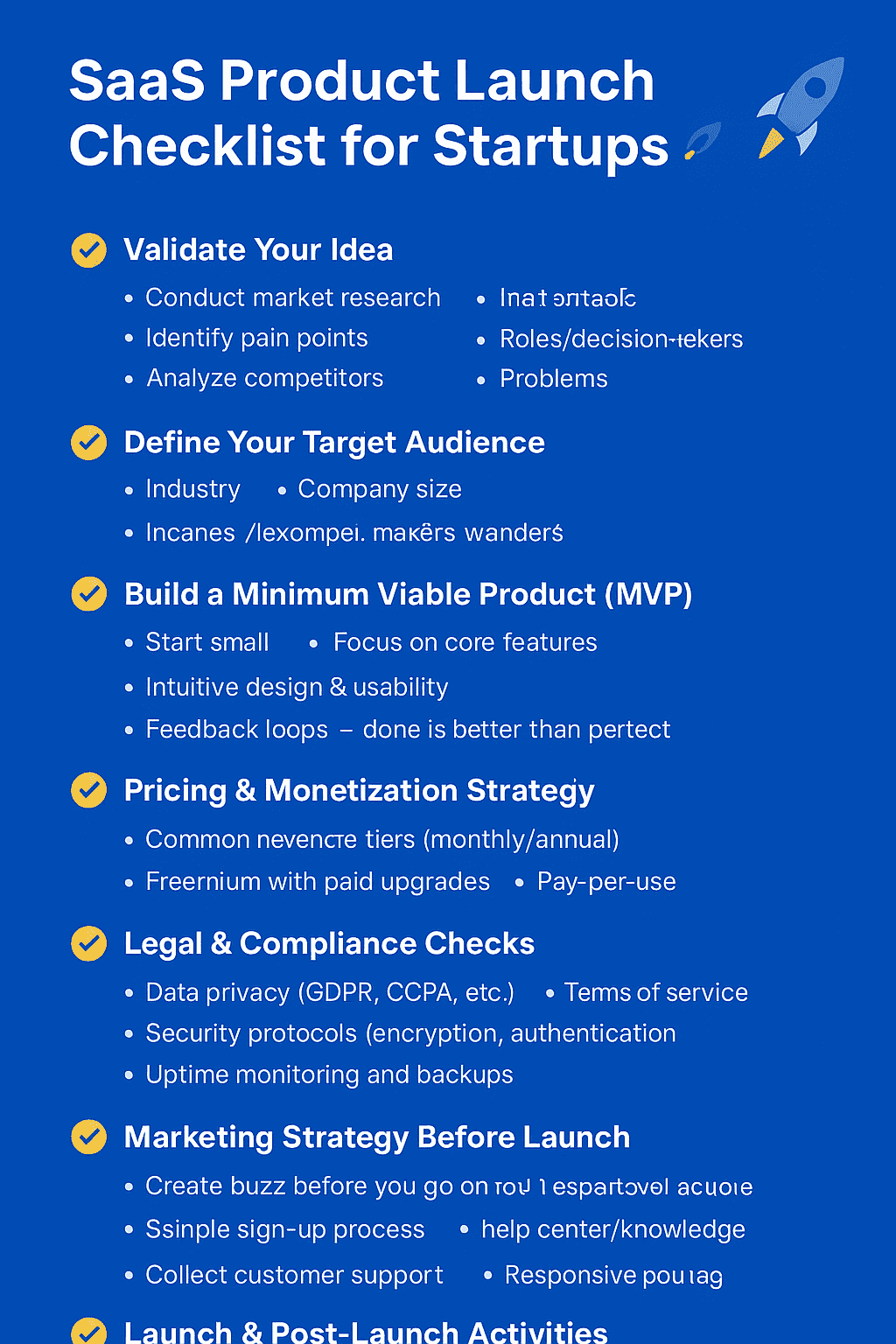
1. Validate Your Idea
Before writing a single line of code, ensure there’s genuine demand for your product.
- Conduct market research
- Identify pain points
- Analyze competitors
- Validate your unique value proposition (UVP)
A strong foundation begins with solving a real problem.
2. Define Your Target Audience
Your SaaS isn’t for everyone—and that’s okay. Define your ideal customer profile (ICP) based on:
- Industry
- Company size
- Roles/decision-makers
- Problems they face daily
The clearer your audience, the sharper your marketing and product messaging.
3. Build a Minimum Viable Product (MVP)
Start small. An MVP allows you to test core functionality with minimal cost and risk. Focus on:
- Core features solving the main problem
- Intuitive design and usability
- Feedback loops to improve quickly
Remember: done is better than perfect.
4. Pricing & Monetization Strategy
How will your SaaS make money? Common models include:
- Subscription tiers (monthly/annual)
- Freemium with paid upgrades
- Pay-per-use pricing
Keep pricing transparent and aligned with the value you deliver.
5. Legal & Compliance Checks
Don’t overlook this step—it can save you big headaches later.
- Data privacy (GDPR, CCPA, etc.)
- Terms of service & privacy policies
- Security certifications if applicable
Trust is a currency in SaaS—earn it early.
6. Set Up Scalable Infrastructure
Your SaaS must grow with your users. Focus on:
- Cloud hosting (AWS, Azure, GCP)
- Security protocols (encryption, authentication)
- Uptime monitoring & backups
- API readiness for integrations
Performance and reliability are non-negotiable.
7. Marketing Strategy Before Launch
Create buzz before you even go live.
- Build a landing page with email capture
- Share teasers on LinkedIn, X, and niche communities
- Start a blog for SEO-driven traffic
- Reach out to beta users and early adopters
Pre-launch hype can lead to a strong Day 1.
8. On-boarding & User Experience
A great product is useless if people can’t figure out how to use it.
- Simple sign-up process
- Guided product tours
- Help center/knowledge base
- Responsive customer support
Good onboarding = higher retention.
9. Analytics & Feedback Loop
Measure everything from Day 1.
- Track KPIs: churn rate, MRR, CAC, LTV
- Collect customer feedback regularly
- Iterate and update quickly
Your product will evolve—make data your compass.
10. Launch & Post-Launch Activities
Finally, it’s time to hit “go.”
- Official launch announcement
- PR outreach & social media campaigns
- Customer success stories/testimonials
- Monitor usage closely for issues
And remember, launch day isn’t the finish line—it’s the starting point of growth.
🚀 Final Thoughts
Launching a SaaS product as a startup can feel overwhelming—but with a solid checklist, you reduce risks and maximize your chances of success. Focus on solving real problems, building customer trust, and iterating fast.
Your launch is more than an event—it’s the beginning of a long-term relationship with your users.
